Case Study: Noise Disturbance from Cooling Systems
"Managing noise disturbance from cooling systems in a cold storage facility can be effectively addressed by isolating noise frequencies, installing sound-absorbing panels to reduce fan echo inside the building, and using acoustic louvers around the building where sound passes through. These measures help keep noise levels in affected areas below legal disturbance limits."
A large business operating a cold storage facility provides import, storage, and distribution services for foreign food and beverages to local customers. The company uses cooling systems 24 hours a day, resulting in noise disturbance affecting nearby residents, especially at night (10 PM - 6 AM).
According to the Department of Health, Ministry of Public Health's announcement on noise nuisance standards, dated June 24, 2015:
"Nuisance" refers to a nuisance as defined by public health law (Public Health Act B.E. 2535, Section 25, in cases that may cause distress to nearby residents or those exposed to the situation).
"Noise disturbance" means the noise level from a source during disturbance that is higher than the background noise level, with a disturbance level exceeding the specified noise disturbance level.
Article 2 sets the noise disturbance level at 10 dBA. If the calculated noise disturbance level exceeds 10 dBA, it is considered a nuisance.
Article 3 outlines methods for measuring background noise levels, noise levels without disturbance, measuring and calculating noise levels during disturbance, calculating disturbance levels, and recording noise disturbance measurements.
"Disturbance level" means the difference between the noise level during disturbance and the background noise level.
"Background noise level" refers to the environmental noise level measured when the noise from the source of complaint or potential disturbance is not present, represented by the 90th percentile level (LA90).
"Noise level during disturbance" means the noise level measured and calculated when the noise from the source of complaint or potential disturbance is present.
"Noise level without disturbance" refers to the environmental noise level measured when the noise from the source of complaint or potential disturbance is not present, represented by the average noise level (LAeq).
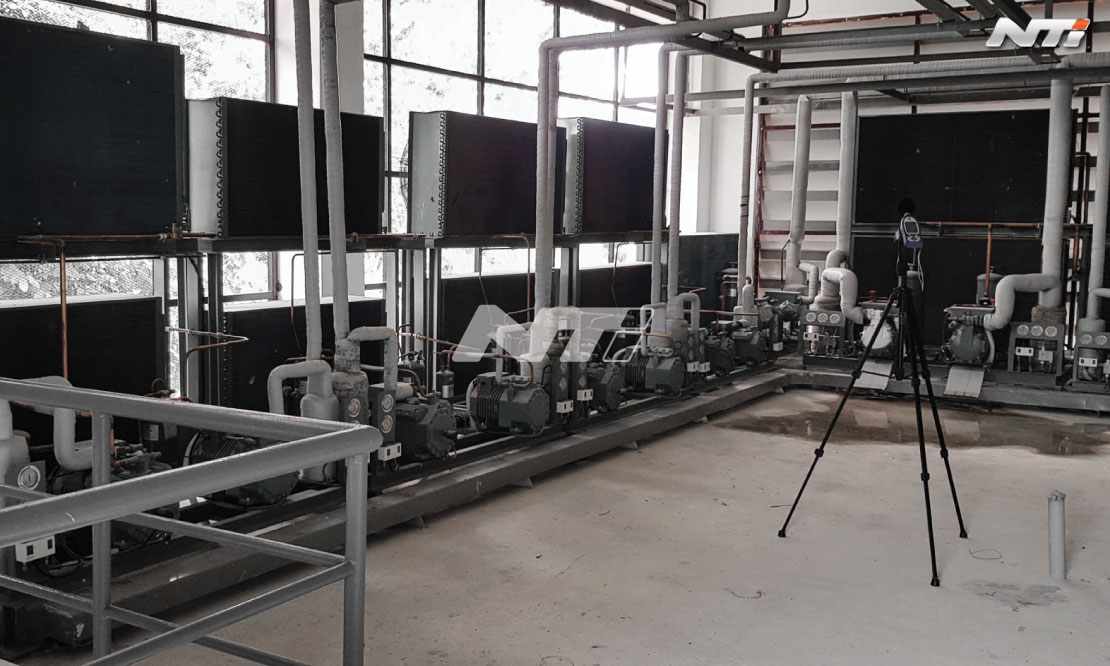
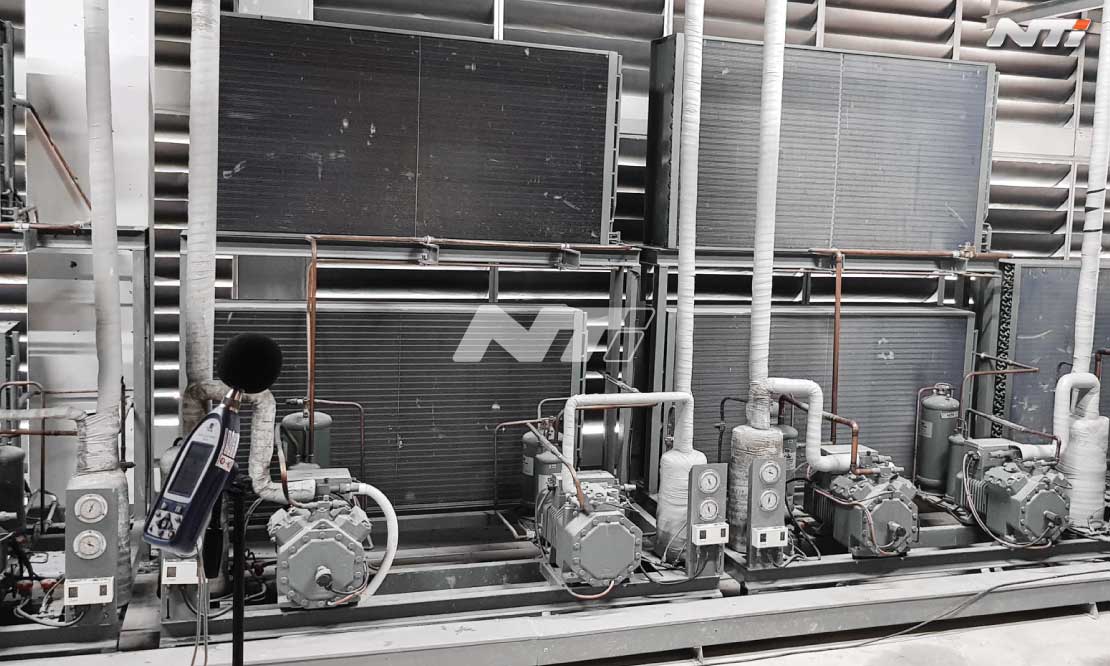
NTI conducted on-site data collection and found that nighttime noise levels without disturbance were around 40 dBA, but when the cooling system was operating, noise levels during disturbance reached 60 dBA. The main source of noise disturbance was identified as the cooling fans of 12 cold storage compressor units located on the second floor of a concrete building on the premises. Common causes of compressor noise problems include:
- Prolonged continuous operation of compressors
- Equipment vibration
- Improper installation
- Lack of maintenance
After identifying the source of noise disturbance from the cooling system's compressor cooling fans, NTi conducted an inspection using applied scientific research methods and sound engineering tools. They found that the noise disturbance comprised both compressor cooling fan noise and echo within the fan-installed building. NTi analyzed all data and proposed the following solutions:
1. Reduce noise by installing echo reduction systems in specific necessary areas within the building:
- Helps reduce sound reverberation within the area
- Suitable for controlling noise at the source
- Installing only in necessary areas helps reduce costs
2. Install acoustic louvers appropriate for the noise frequency and sound power level:
- Acoustic louvers are specifically designed to reduce noise while maintaining ventilation
- Selecting appropriate acoustic louvers for the noise frequency increases noise reduction efficiency
- Choosing acoustic louvers considering sound power levels helps select appropriate size and efficiency, saving costs
After implementing the improvements by installing echo reduction systems inside the building and acoustic louvers, NTi conducted another on-site data collection. The results showed that noise levels during compressor fan operation were reduced from 60 dBA to only 42 dBA, a significant reduction of 18 dBA. This effectively solved the noise disturbance problem using appropriate engineering methods, satisfying those affected. The business can now coexist with surrounding residents, resolving the noise disturbance issue.