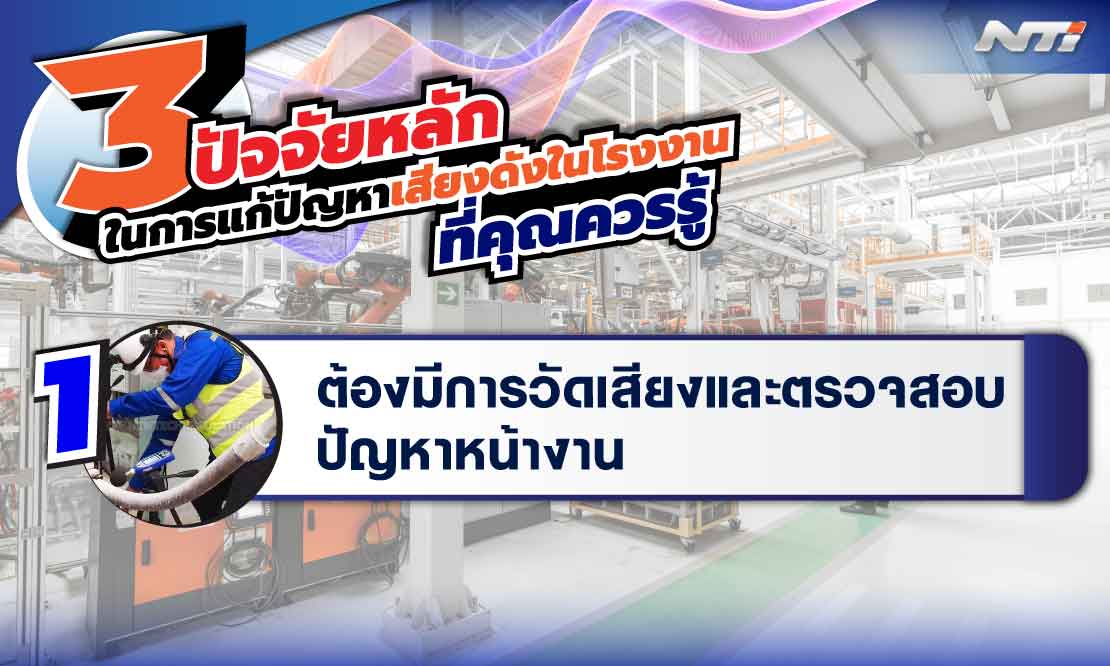
3 Key Factors in Solving Factory Noise Problems You Should Know
One of the most significant problems in industrial factories is the issue of noise disturbance. This problem not only creates annoyance or affects health and work efficiency, but it also impacts nearby communities. It can lead to legal disputes and, in severe cases, may result in temporary closure orders from authorities for noise mitigation measures to be implemented.
Addressing factory noise problems, especially those affecting external communities, should be a top priority. Failure to control noise levels within legal limits in a timely manner can escalate the situation. Although solving noise issues from factory activities can be challenging and costly, requiring significant budget and consideration of legal compliance, here are three key factors to understand before deciding on noise reduction measures:
1. On-site Noise Measurement and Problem Assessment
To effectively solve noise issues and meet legal standards, it's crucial to measure noise levels at the source. By law, the average noise level in work areas should not exceed 85 dBA over the work period, with a maximum of 115 dB in factory work areas.
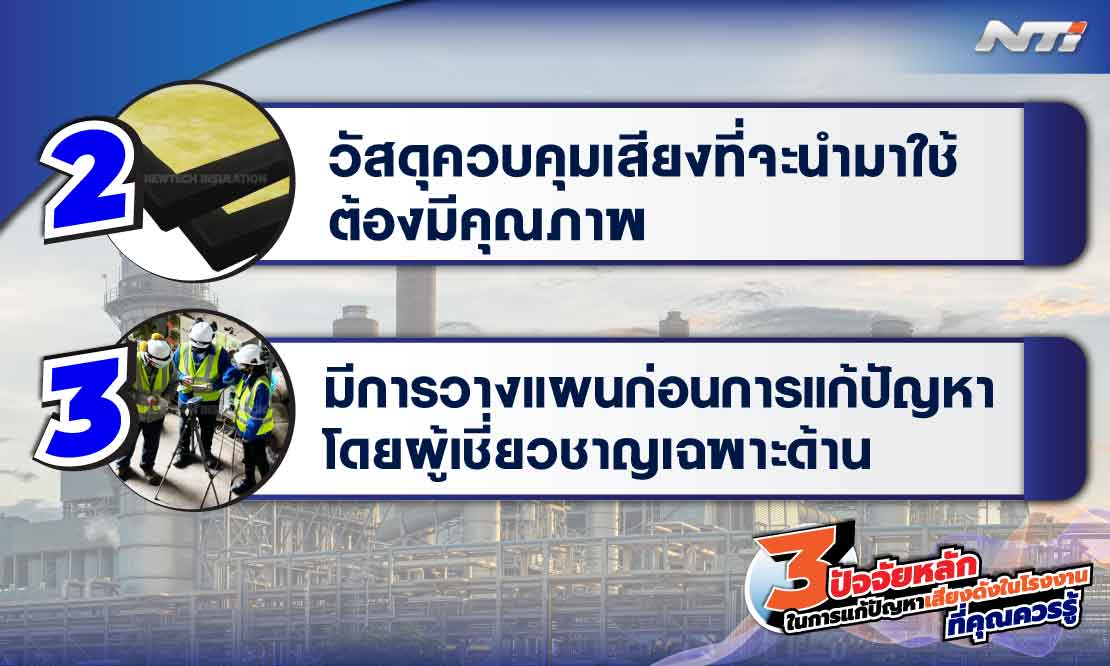
2. Quality of Noise Control Materials
Before selecting noise control materials, basic knowledge is essential. "Noise control materials" are designed to reduce noise, echoes, reflections, and sound transmission. They are classified into three main types:
2.1 Absorptive Materials: These absorb sound within a room, reducing echo problems.
2.2 Insulation Materials: These prevent noise disturbance, with effectiveness depending on density and size.
2.3 Diffusers Materials: These disperse sound, reduce sound energy, and help distribute sound evenly across an area.
To achieve optimal results, the choice of materials must align with the specific noise in the area or factory workspace. Factors like installation position, material size, and density of each type must be considered. The efficiency of noise control materials should be evaluated based on test results or acoustic property reports.
3. Pre-implementation Planning by Specialists
Noise problem solving is not a task for everyone and doesn't always yield expected results. It requires analysis to identify noise sources, design, and engineering calculations for noise reduction. Consulting with experienced noise reduction specialists is crucial to ensure the most effective solution and compliance with legal standards.
These three factors are fundamental in addressing factory noise issues. Factory operators must prioritize them to ensure efficient noise reduction without wasting resources. If you're experiencing noise problems in your factory, such as noise levels exceeding 85 dBA, community disturbances, or legal complaints, and need advice on noise reduction, you can get free consultation at Line: @newtechinsulation.
...Because we understand noise.