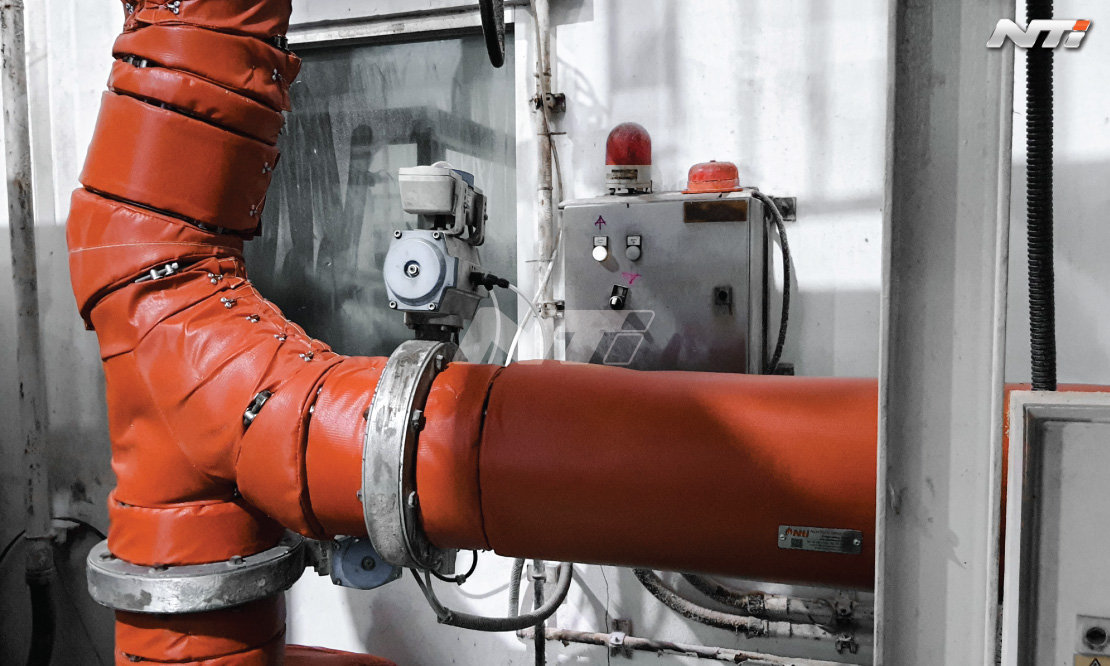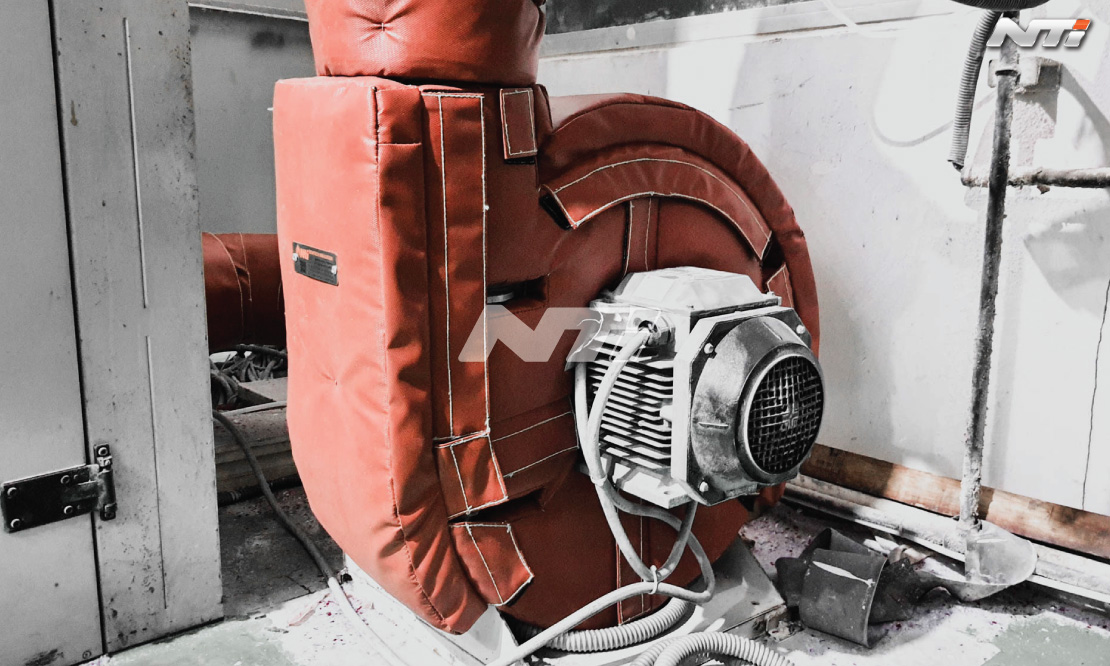
Problem
Employees from the raw material preparation department in a production area of a packaging factory were exposed to noise that exceeded the legal limit for 8 hours during the working day. Area supervisors and occupational health and safety officers wanted to reduce the noise exposure rates of all employees who worked in this department, but there were many different noise sources from machinery in the area. Therefore, the team was unsure of where to start with noise control. They needed to reduce the noise level in the area as much as possible while remaining within the available budget.
Cause
The area, where most employees worked, was in close proximity (around 6-7 meters) to the pneumatic material-transferred pipes. When collecting noise data, it was found that the cause of the noise problem was from the operation of the centrifugal fan and material-transferred pipes system. Additionally, there was noise reverberation due to the system being installed next to the building wall. The noise that occurred while the material-transferred pipes were in operation was a loud noise. It was 98 dBA in the centrifugal fan area and 89 dBA in the employees' working area (including machinery noise from other sources).
Improvement Protocol
- Due to budget constraints and this being an experimental project, the noise reduction method needed to stay within the allocated budget
- Evaluated the sound power level (SWL) from the noise source to the receiver
- Confirmed the noise frequencies of material-transferred pipes with the FFT (Fast Fourier Transform) technique
- Collected noise data at key points between the noise source and receiver for the later comparison prior/post improvement
- Calculated the sound attenuation value (Transmission Loss: TL) of the material and the appropriate thickness
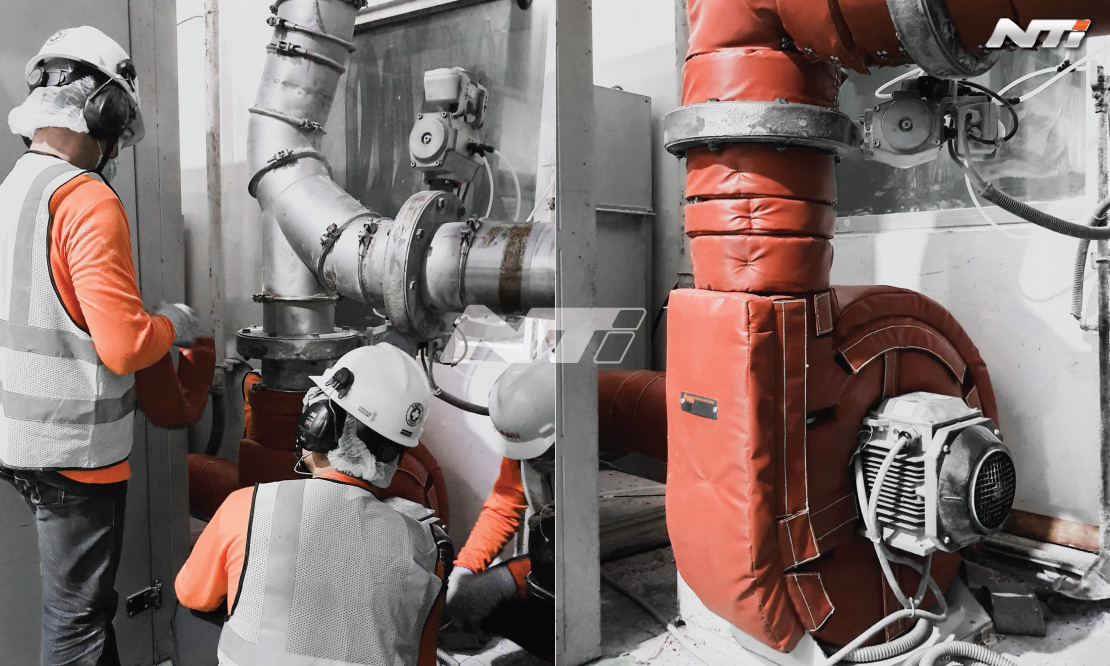
- Installed "acoustic jackets" and collected noise data after the improvement
Improvement result
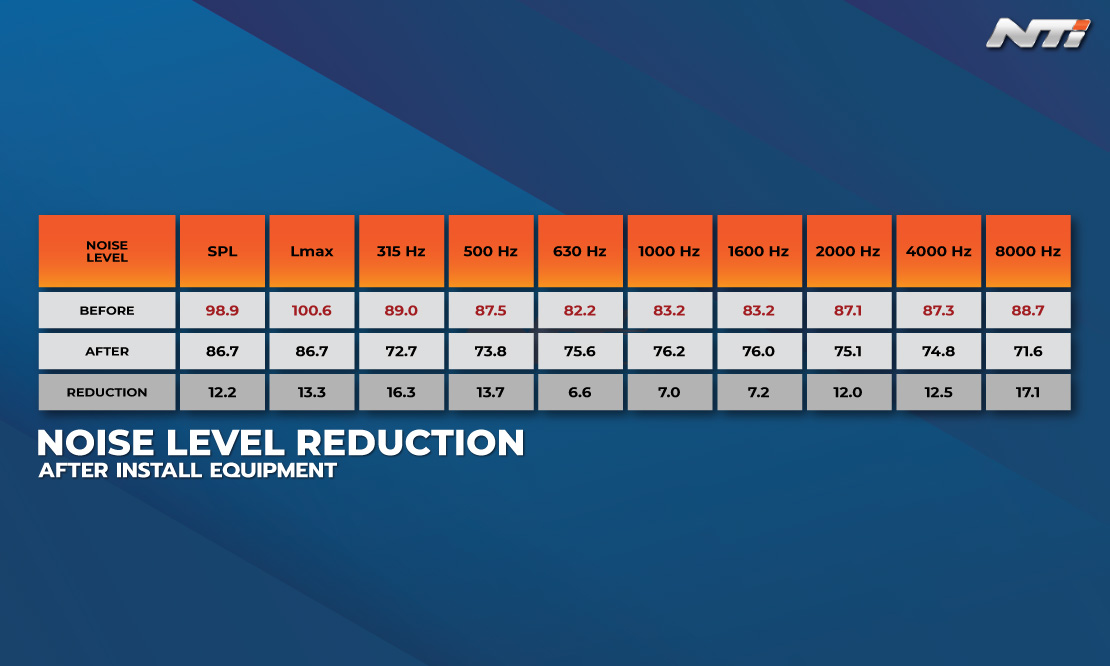
- The average noise level while the material-transferred pipes operated was reduced from 98 dBA to 86 dBA
- The noise level in employees' working area was reduced from 89 dBA to 85 dBA
- It was possible to reduce noise from other noise sources to make the overall noise level drop below 83 dBA