
Problem
The production area of a beverage factory had a noise level of 8 hours that exceeded the standards of 85 dBA. The characteristics of the area were that of a rectangular room, which had dimensions of width 30 meters, length 40 meters, height 6 meters, and the walls of this room had a smooth surface. In this large room, there was a smaller control room which had dimension of width 5 meters, length 8 meters, and height 3 meters. Employees exposed to noise over the standard were those who worked outside the control room. Furthermore, employees who worked inside the control room, also faced a noise problem. As a result, they were forced to talk louder or shout instead of engaging in normal communication.
Cause
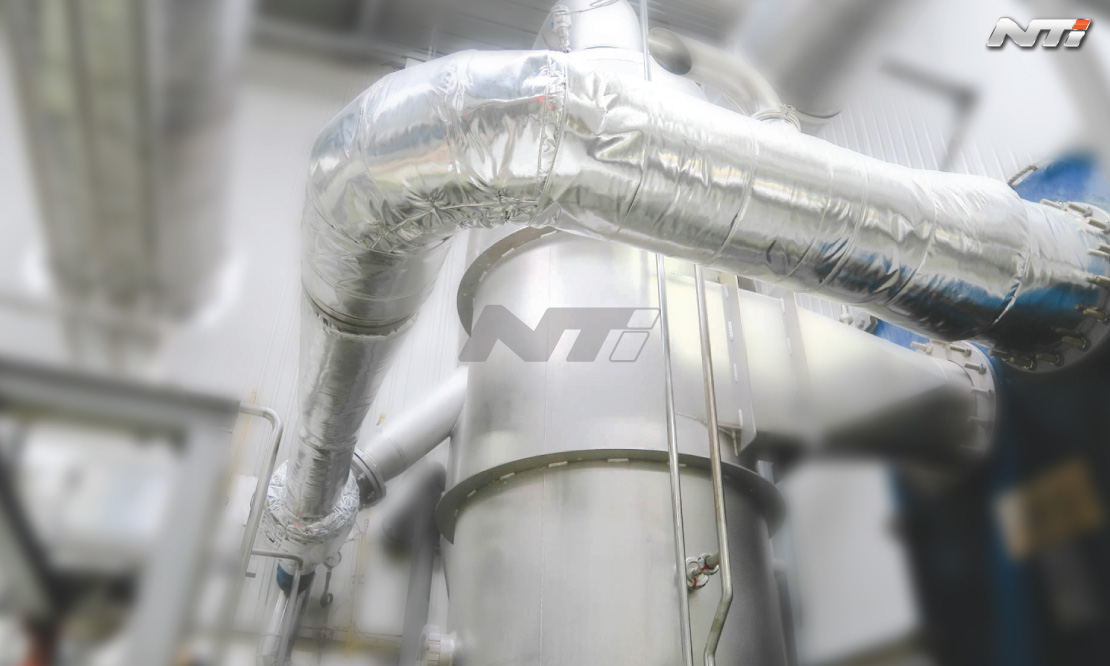
When inspecting the working area, it was found that the large room had noise problems directly from the noise source and reverberation noise. However, after using an instrument to identify the noise source, it was found that the main noise source came from evaporator pipes with a diameter of 4 inches, 6 inches, and reducer pipe with a diameter of 10 inches which were connected and had a total length of 6 meters. The noise level of the pipeline was 103-106 dBA, resulting in an average noise level within the working area of around 86-94 dBA.
Improvement Protocol
- After analyzing the noise data, it was confirmed that the reducer pipe of the evaporator system was the main noise source
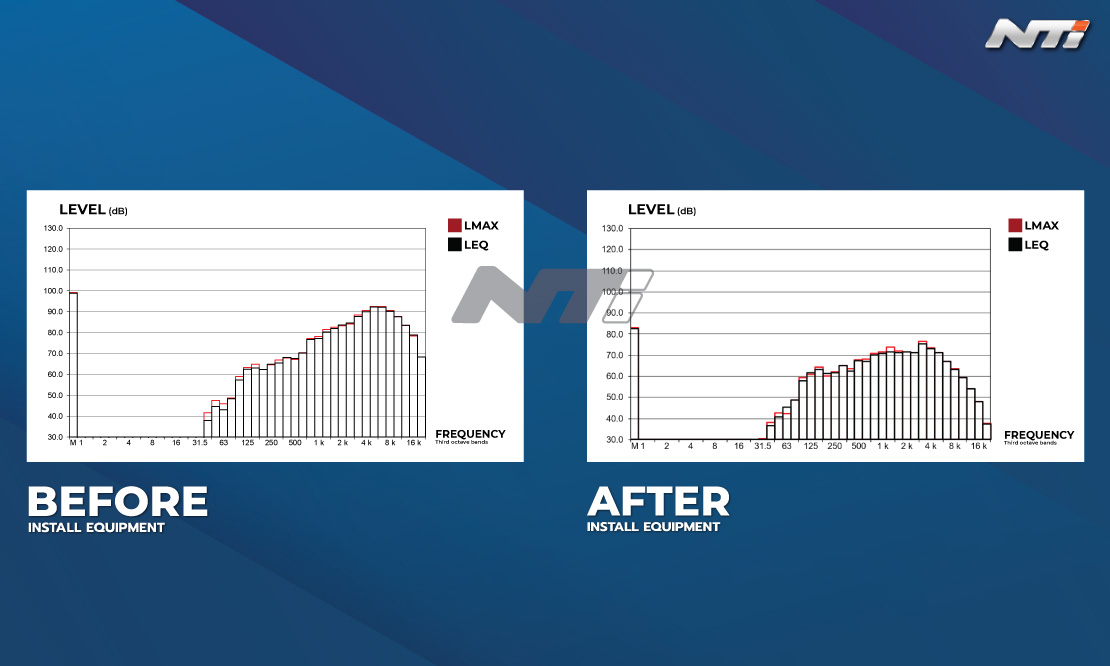
- Examined the pipeline frequencies and found that major frequencies were in the range of 4000-8000 Hz
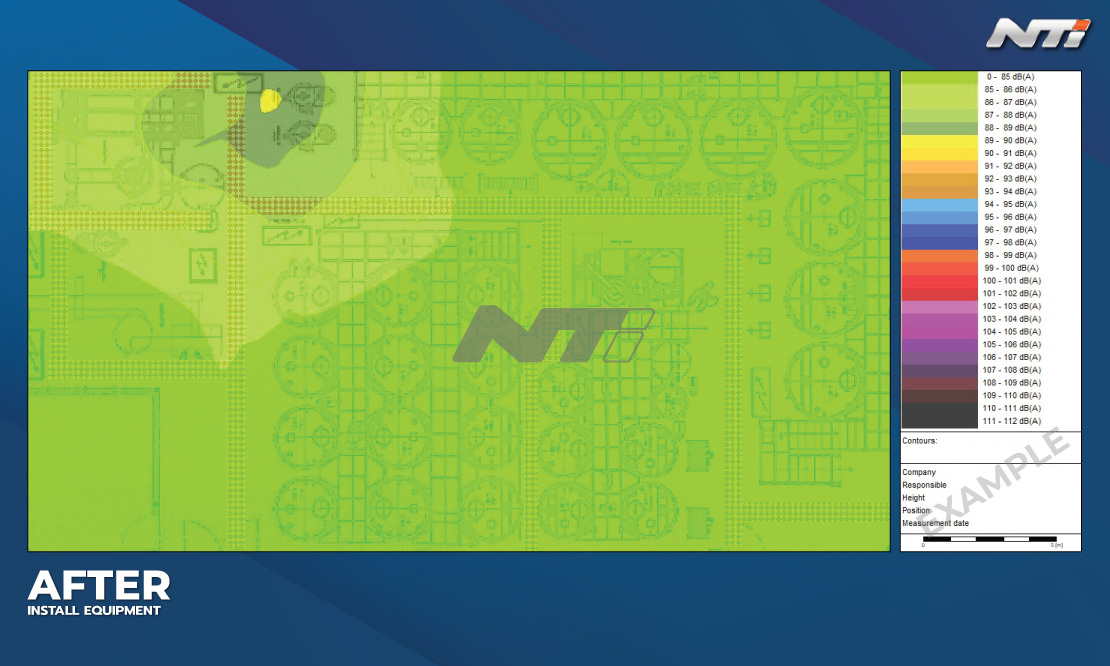
- Collected noise data throughout the area and created a "noise contour before improvement"
- Calculated the noise attenuation of the pipe with various materials and selected the appropriate thickness
- It was found that using "acoustic jackets" attached to the entire pipeline was the optimum solution
- Installed noise reduction equipment for the entire pipeline and collected noise data after improvement
Improvement result
- The average noise level in the working area decreased from 86-94 dBA to 77-83 dBA
- Employees who worked inside the control room were able to communicate normally without shouting
- Successfully solved the noise problem, which exceeded the standard without machinery modification or any changes to the factory’s production methods