Noise Level Measurement Service with Improvement Recommendations
When facing noise disturbance issues and needing maximum noise reduction at minimum cost, knowing the disturbance levels and the main frequencies of the occurring noise helps design efficient sound control systems. This approach solves problems in one go, eliminating guesswork or trial-and-error methods. It saves time and expenses for project managers, resolving issues where noise reduction systems either don't work or work but at unnecessarily high costs.
Service Users:
- Establishments with noise sources exceeding standard levels
- Safety officers at all levels
- Those responsible for implementing hearing conservation measures
- Occupational Safety, Health, and Working Environment Committees
Work Methodology:
- Measurement of noise disturbance levels according to Thai Law (Thai's Law Report)
- Measurement of noise disturbance levels according to Noise Criterion (NC Report)
- Data analysis to identify dominant noise frequencies and disturbance levels
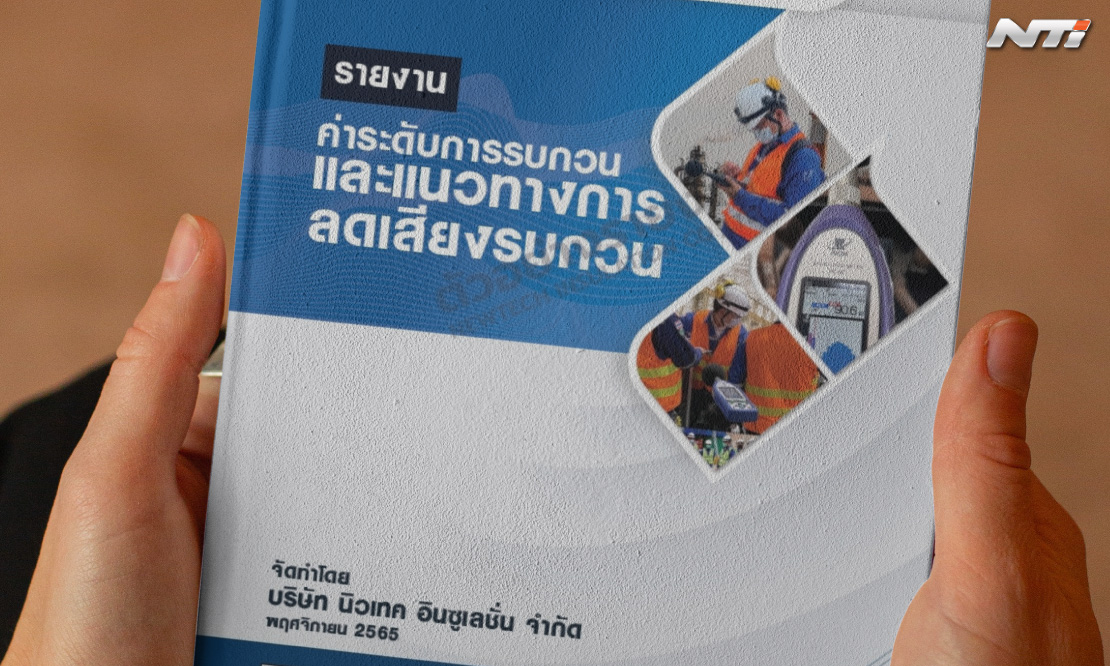
- Preparation of disturbance level reports with improvement guidelines (Report with Conceptual Design)
- Discussion of report results with recommendations from noise disturbance specialists (Presentation by Specialist)
When faced with noise problems and aiming to reduce the sound as much as possible at the lowest cost, knowing the noise level and main frequency of the disturbance can greatly enhance the effectiveness of the noise control system design. It allows for a one-time solution without the need for guesswork or trial and error, saving time and project costs. This eliminates the issue of implementing ineffective noise reduction systems or achieving results at unnecessarily high expenses.
Target Users:
- Establishments with noise levels exceeding regulatory standards
- Occupational safety officers at all levels
- Personnel responsible for implementing hearing conservation measures
- Occupational Health and Safety Committees
Work Process
- Measure noise levels in compliance with Thai legal standards (Thai’s Law Report)
- Measure noise levels based on Noise Criterion (NC) standards (Noise Criterion Report)
- Analyze data to identify dominant noise frequencies and levels (Dominant Frequencies)
- Prepare a detailed noise level report with improvement recommendations (Report with Conceptual Design)
- Present the findings and provide expert recommendations (Presentation by Specialist)
Equipment
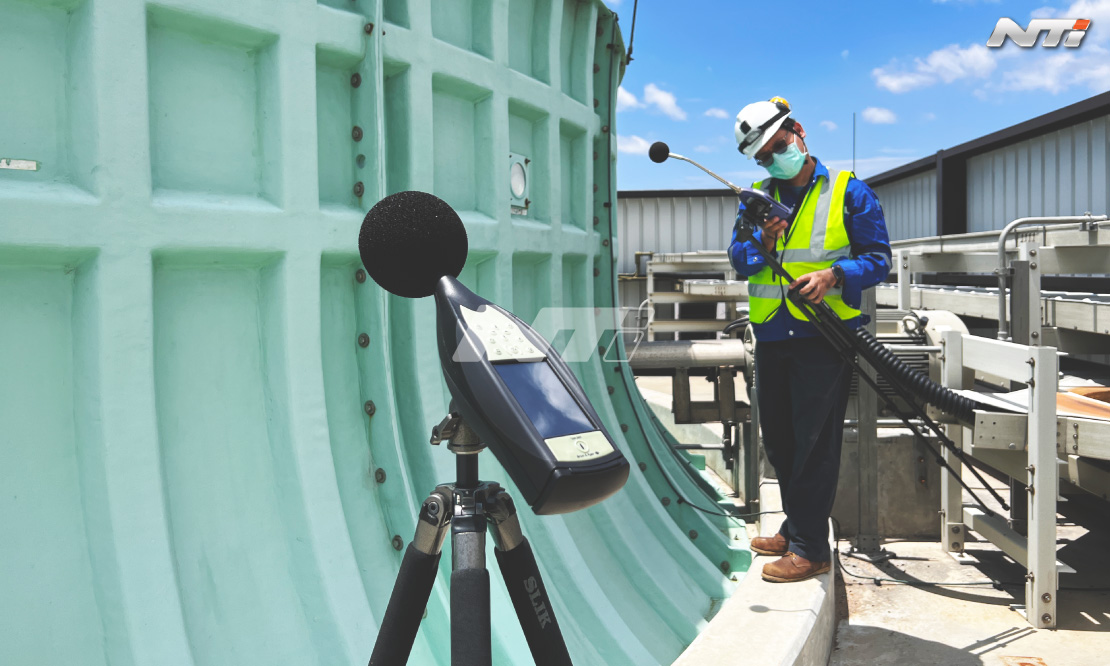
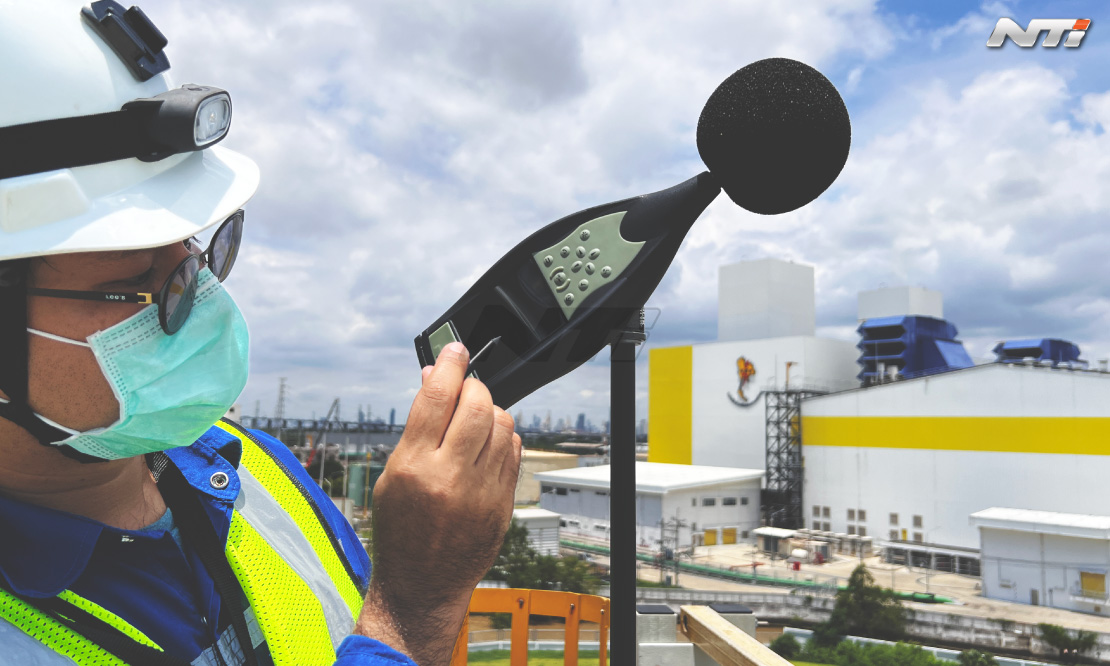
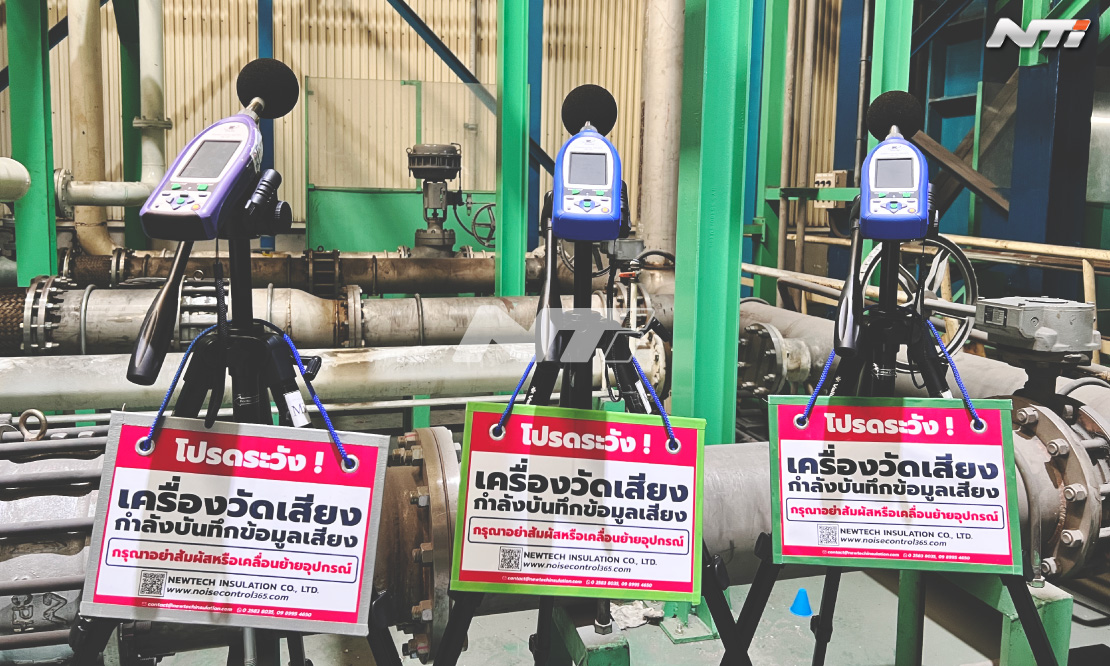
- Frequency-analyzing sound level meter (IEC 61672 Class 1 and Class 2)
- Sound calibrator (IEC 60942 Class 1)
- Tripod for sound level meter
Deliverables
-
A noise level report based on standards from the Pollution Control Department, Department of Industrial Works, or NC (Noise Criteria), including recommendations for noise reduction and estimated costs.
Benefits of the Noise Measurement Service with Improvement Recommendations
-
Can be used as legal evidence if accused of being a noise source
-
Verifies whether the reported or alleged noise levels are accurate
-
If actual noise exists, identifies the noise level in dBA and how many decibels need to be reduced
-
Supports noise simulation for decision-making on whether to proceed with a noise reduction project
-
Recommends appropriate noise control methods tailored to the specific operations of the facility
-
Enables decision-making based on scientific and engineering principles
-
More cost-effective than trial-and-error approaches
-
Guarantees the post-improvement noise level